Paulius Andersson.
Understand the rule
to achieve true interpretative freedom.
Foreword PianoVrienden
With great pride, we present this inspiring portrait of an exceptional pianist. His story reveals how dedication, discipline, and passion come together in a unique artistic voice. From early memories to international stages, his journey reflects music as a lifelong pursuit. We hope his insights and experiences resonate with you as deeply as they have with us.
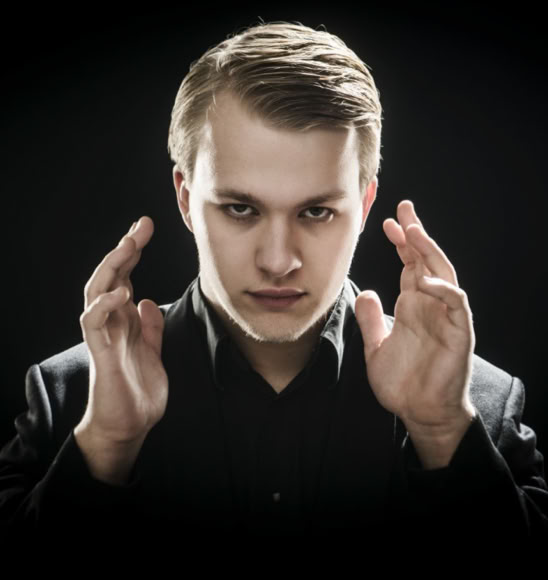
Personal & Background
Can you tell us about your earliest memories of music and how it shaped who you are today?
My earliest memory is of my mother practicing Liszt's Sonata in B minor, while I was running around and screaming, “Tratatata, mama!” Seventeen years later, it took me just three weeks to learn this sonata and perform it on stage.
Growing up in a family of musicians, how did that environment influence your approach to performing and interpreting music?
It's hard to say, but probably many things are in my subconscious. I remember my mother shouting from the shower that I was playing wrong notes. I was under constant surveillance. They always made sure I practiced wisely and didn’t allow me to sit at the piano without a clear goal and a focus on high-quality practice.
What hobbies or interests outside of music help you recharge or stay grounded? (For example, weightlifting or MMA.)
I love doing sports such as MMA and Olympic weightlifting. It helps me control my body, and playing an instrument involves not only a musical aspect but also a physical one. By doing sports, I improve my physical control. It is also important to be in good health in order to cope with traveling and performing many concerts.
Besides sports, I enjoy cars, specifically off-roading. It helps me clear my mind and recharge.
If you weren’t a pianist, what other profession do you think you might have pursued and why?
On my father’s side of the family, many people are athletes, so most likely I would be one as well. I am very athletic and have always been good at sports. I also like history, so I might even choose something related to that field.
Stability in music creates freedom in expression.
Musical Journey & Education
You started playing piano and drums at age five — how did learning drums influence your sense of rhythm and musical interpretation?
It helps me to be very stable when performing complex rhythmic works. Also, there are many practice methods that I learned from playing drums that I use in my piano practice as well.
What are some defining moments from your early musical training that you feel were pivotal to your development?
My grandmother organizes a festival where she invites renowned professors from all over the world. Every year, I had the privilege of working with them and talking to them. This was very crucial for my development as both a musician and a person. It played a huge role for me.
I was lucky to have lessons with the best professors from a very young age. The famous Russian pianist Vera Nosina shaped my understanding of Bach. When I was part of the Rostropovich Foundation, they funded my trips to Moscow to study with Valery Piassetski. He was very strict with me and always pushed me extremely hard.
How did your time at the National M.K. Čiurlionis Arts Gymnasium shape your artistic identity?
It is very hard to say, but most likely it was the environment. I was always surrounded by artist friends. We talked and discussed music, art, and opera a great deal. We attended concerts together.
Which professor or mentor had the biggest impact on you, and can you share something memorable they taught you?
I was very fortunate with my mentors, and I cannot choose just one. They were not only my mentors, but most of them also became my friends. So it was not only the musical aspect that influenced me.
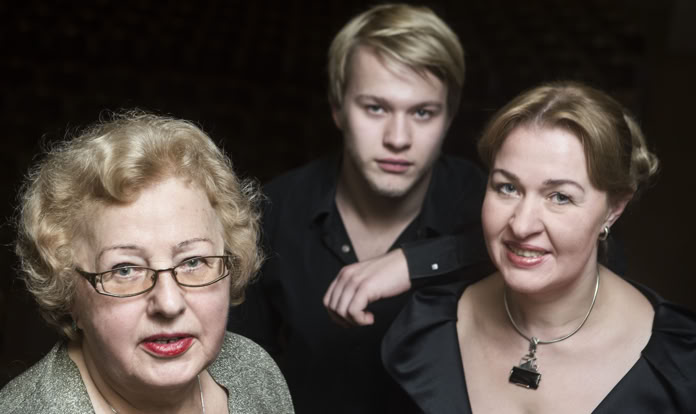
First of all, I am very grateful to my mother, Aleksandra Žvirblytė, who has taught me since the 5th grade. She was the one who instilled in me a love for large-scale works. She encouraged creative ways of solving problems and taught me how to make everything sound natural.
My grandmother, Veronika Vitaitė, taught me how to listen. She showed me how to learn Bach and emphasized how crucial it is to practice fugues by learning each voice separately. She also taught me how important musical transitions are. She would read me musical literature, take me to concerts, and show me films about Richter.
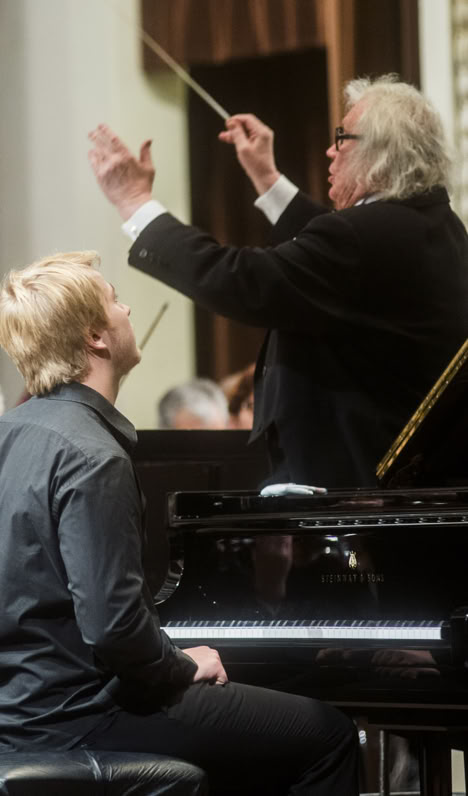
My grandfather, Vytautas Žvirblis, taught me how to sing every note internally before playing it. He showed me how to solve tension-related problems and how important conducting is in piano playing.
I would also like to mention the jazz musician Oleg Molokojedov, who made me fall in love with drums and, in many ways, set me on my musical path. I participated in various jazz festivals, and this had a significant impact on how I later approached rhythm and musical freedom.
I am also very grateful to my first piano teacher, Ema Miklaševskaja, who taught me all the basics, which are the most important part of playing the piano.
Vera Nosina taught me how to play Bach, shared elements of the Russian school, and influenced me as a person.
Valery Piassetski humbled me when I thought I was the best. He pushed me hard to play everything at 100%.
Aleksander Ivanov showed me various ways of practicing and how to solve musical problems. He taught me how to produce a high-quality sound and how Prokofiev should be played. He also introduced me to the Vladimir Krainev piano school.
Music requires both physical control and inner imagination.
Zbignevas Ibelhauptas taught me the importance of structure in music — how to build it properly. He also taught me that rhythmic structure and stability are the backbone of music, and that this stability gives us freedom.
Paolo Giacometti taught me how to play pianissimo, how to play leggiero and legato, how to nuance the pedal, and how to phrase. He also taught me how to play from half of the key and how to create an intimate, gentle sound.
Kevin Kenner always encouraged me to find my own interpretation. He helped me make it sound convincing and professional. He also showed me some secrets of playing Chopin and how to practice difficult sections. He always tried to bring out my best qualities while improving my weaknesses.
Geoffrey Douglas Madge introduced me to different ways of practicing and playing. He showed me how to make the piano sing and how to create different sounds. He introduced me to Busoni technique and always encouraged me to make every moment special. Even now, if I have issues with my playing, he is always there to help both professionally and career-wise. Also, he always encouraged me to be open minded and experiment with different ways of playing and sound production.
Philippe Raskin taught me how to practice, how to phrase, and how important harmony is. He introduced me to the Viennese piano school. He never allows me to play the same thing twice in the same way. He pushes me to play everything at 500%. He also showed me the Liszt method for developing technique and practicing octaves. He taught me that the devil is in the details and helped me prepare for competitions.
How has studying in institutions across Lithuania, Germany, the USA, and now Belgium influenced your musical perspective?
I imagine this as a bee gathering nectar from various flowers. It is always important to take the best from each school and each professor.
What difference did working with renowned pianists like Kevin Kenner or Geoffrey Douglas Madge make to your technique or philosophy?
Kevin Kenner always encouraged me to find my own interpretation. He pushed me to search and explore what I can do. He never allowed me to play casually and always looked for meaning behind the notes. He never imposed his ideas but tried to integrate them into my playing without disrupting my interpretation.
Geoffrey Douglas Madge showed me techniques from old masters such as Busoni, Rubinstein, and Rachmaninov. His main idea is that the fingers are an extension of the keyboard, and I always keep this in mind when I perform.
He always wanted me to perform in the most natural while making each moment special and unique.
Performance & Artistic Vision
You're known for performing complex virtuosic repertoire — what draws you to challenging pieces?
I have always liked challenges in my life. Since I was a child, my mother would give me large-scale works to learn. I guess this is why I play so much of this repertoire.
How do you prepare mentally and physically for performing large-scale concerto works?
I don't have a specific routine, but I treat my preparation like that of an athlete. Both athletes and musicians prepare for months before performing. One of the most important things is to practice less in the days before the performance. One day before the concert, I usually practice no more than four hours and then do something unrelated to music.
I might play pool, go out with friends, watch a movie, or take my dog for a long walk.
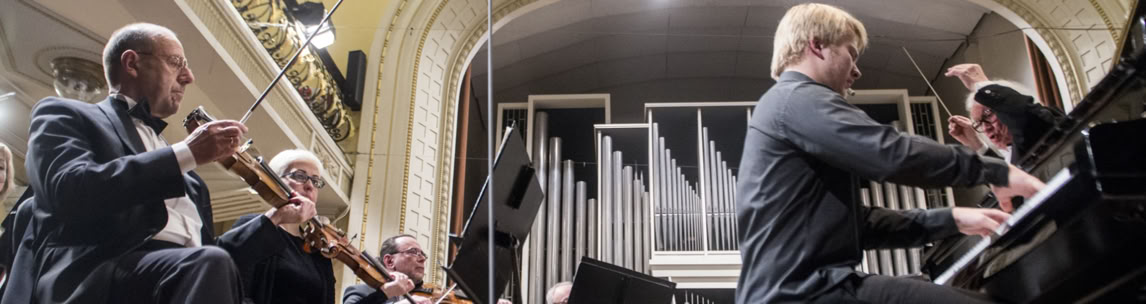
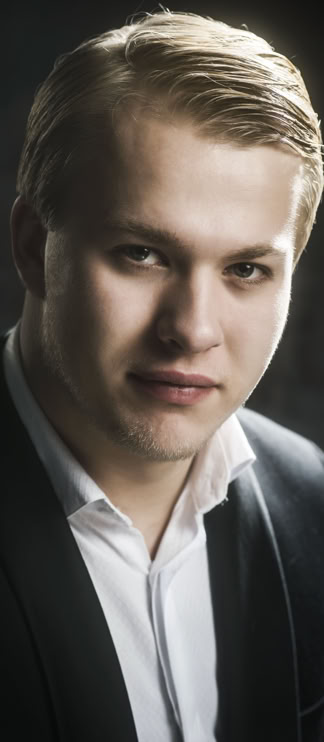

What is one work in your repertoire that you feel a particularly deep connection to, and why?
Rachmaninov's Third Piano Concerto.
It was my dream to play it since I was eight years old. I first performed it when I was 19 at my grandmother's 70th anniversary concert. That was the day my father came to visit me from the Philippines after five years apart. Sadly, it was the last concert he attended, as he passed away shortly afterward.
Last year, I returned to this concerto and performed it in the final round of the Lyon Piano Competition. The day before leaving for France, I found out that my wife was pregnant and that we were having a boy. While I was practicing the concerto, my unborn son reacted to it in a very distinct way.
Even now, he reacts to it and seems to recognize it immediately.
This concerto is also my brother's favorite — he would always whistle the main melody.
So this piece is very special to me, as it is connected to many important moments in my life.
Can you share the story behind your recording of Medtner's Night Wind Sonata and what it means to you?
It was recorded multiple times during a live concert. This sonata is probably my favorite piano sonata. As soon as I opened the score and started working on it, I had the feeling that Medtner wrote it for me.
You perform both solo and chamber music — what do you enjoy most about playing with others?
Firstly, I am a social person, so I enjoy working with other people, sharing ideas and music. I don’t treat it as chamber music — I think it is simply music.
How do you approach interpreting lesser-known works compared to standard repertoire?
The same way I would approach well-known pieces. The only difference is that I have more freedom, because there are no norms or prejudices about how it should be played.
Competitions, Awards & Achievements
How do you feel competitions have shaped your career? Are there specific lessons you've learned from competing?
I think preparing for competitions has really helped me become a better musician. I always thrive in stressful situations, and I don’t think there is anything more stressful than a piano competition. Competitions have helped me gain exposure, secure concerts, and meet important people in my life. Thanks to the Lyon and MoZarte competitions, I received many concert engagements, and my 2026/27 season is almost full.
What did winning the Audience Prize at the MoZarte Competition mean to you personally?
In many competitions, the winner is usually not the audience's favorite. I was very honored to be the winner in everyone's eyes. This meant a lot to me and gave me a huge confidence boost.
Was there a particular performance you consider a turning point in your career?
I don't have one specific performance. I have had multiple performances that helped take my career to the next level.
Collaboration & Musical Partnerships
You often perform with your wife, violinist Julija Andersson — how do you balance artistic and personal relationships in performance?
We treat it as a mutual hobby, and that changes the whole perspective. It makes everything easier.
What repertoire or composers do you most enjoy performing together?
We love dramatic, large-scale works and music of the 20th and 21st centuries. Our top picks would be Franck’s Sonata for Violin and Piano, Brahms’s Sonata No. 3, Lutosławski’s Partita, and Auerbach’s Sonata No. 3.
We also promote contemporary Lithuanian composers and have commissioned a piece by Vytautas Germanavičius, which we premiered last year.
Details define the difference between good and exceptional playing.
Do you find chamber music informs your solo playing, or vice versa?
I think both complement each other.
Career Reflections & Philosophies
What does musical success mean to you in today's world?
I don't think about this that much. I just try to focus on being the best and pushing myself as hard as I can. I think being successful in music is no different from other professions — it is simply the result of hard work and dedication.
How do you deal with performance anxiety or expectations from audiences and critics?
I don't have this problem, and honestly, I don't care what critics say. You can't please everyone.
How do you balance tradition with innovation when interpreting classical works?
I always try to stick to what is written in the score and, on top of that, add my own interpretation without disrespecting the composer. Many people either play very boring but correct, or the opposite. I believe you can do both — it just requires more work.
I always remember my mother's phrase:
"What is the difference between a bad and a good criminal? The bad criminal doesn't know the rules."
We need to understand everything about the style and the composer. With that knowledge, we gain the freedom to interpret without distorting the composer's intention.
What role do you think classical music plays in modern society?
First of all, playing an instrument helps people — especially children — develop cognitive skills, even if they do not pursue it professionally.
Classical music also acts as a cultural foundation. A huge amount of today's music — film scores, video game soundtracks, even some electronic and pop music — draws directly from classical traditions. Composers like Beethoven and Bach established structures and harmonies that are still used today.
It also serves as a cultural identity marker. Orchestras, concert halls, and composers are part of national heritage in many countries.
Finally, it encourages deep listening and reflection. Unlike much of today's fast-paced content, classical music requires patience and attention. In that sense, it has a moral dimension — it pushes against impulsiveness and superficial engagement.
Life Outside Music
You're passionate about Olympic weightlifting and MMA — how do these disciplines influence your mindset as a musician?
By doing sports, I clear my mind and strengthen my body. There are many similarities — athletes train for months for a short performance, just like musicians. We practice many hours for months just to perform a 1.5-hour recital.
It also helps me control my body, which is essential in piano playing.
Off-road trips and car rescues sound adventurous — what's the most memorable experience you've had on one of these excursions?
A day before my recital of Liszt's Transcendental Études, I got stuck, and my winch failed. We called for rescue, but the rescuers got stuck as well. We had to wait for another car to rescue us.
How do you balance the physical demands of sports with the demands of intense musical practice?
I don't balance them — they complement each other.
Looking beyond music, what goals or projects would you like to pursue in the future?
At the moment, I am focusing on my son, who was born two weeks ago. Once he is older, we are planning an off-road trip across Africa with my son and friends from the off-road community.
Afterword PianoVrienden
At PianoVrienden, we are honored to share the voice and journey of such a dedicated artist. His reflections remind us that music is not only about mastery, but about curiosity, discipline, and humanity. We hope this portrait offers inspiration and insight, and invites you to listen more deeply — not only to music, but to the stories behind it.

Webpage Paulius Andersson
Redactie e-mailadres:
info@pianovrienden.nl
Pianovrienden | 2026